

Here’s the truth:
Life’s challenges are inevitable.
There will always be an obstacle to overcome, but almost always there will be a remarkable lesson learned in the end.
Ten years ago, when my athletic career ended and I was forced to live on my sister’s couch, I played the victim. I sat around waiting for someone or something to make my life better
I blamed the world for my problems, and I couldn’t understand WHY this was all happening.
It took a massive amount of mental strength, but I had to force myself to get up and find a solution instead of moping in my misery.
And you know what?
Without experiencing the lowest moments in my life, I can honestly say I wouldn’t be the person I am today.
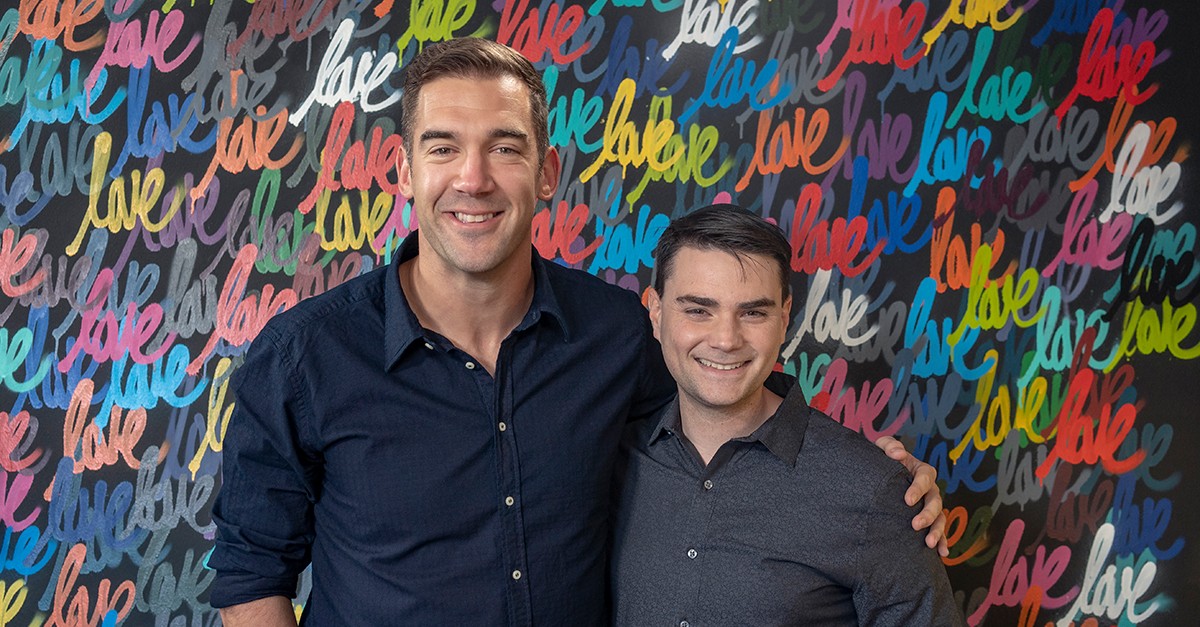
On this week’s episode of The School of Greatness, I wanted to stir up some conversation and hear what conservative political commentator, Ben Shapiro, had to say about playing the victim.
Who is Ben Shapiro?
If you know anything about Ben Shapiro, you probably know that he ruffles a lot of feathers. Ben Shapiro is editor-in-chief of The Daily Wire and host of The Ben Shapiro Show, the top conservative podcast in the nation. Ben is the New York Times bestselling author of seven nonfiction books, including his most recent book, The Right Side of History: How Reason and Moral Purpose Made the West Great. Ben is constantly featured on major newspapers and websites and is widely regarded as one of the best debaters of our time.
Ben believes that people need to look within when they have a problem. He’s more interested in root values than debating specific issues.
Ben and I don’t agree on everything politically, but that shouldn’t stop us having a conversation. In this interview, I was more interested in learning about Ben’s personal life, about what makes him tick, and about his debate strategies rather than his political opinions.
A lot of people either love Ben Shapiro or hate him. When I posted this episode, some of you might have unsubscribed. But the way I look at it is, even if you disagree with someone on something, there is usually something you can learn from them! And there’s probably something they can learn from you!
Get ready to learn about happiness, debate, and owning your problems in Episode 724.
How to Become a Great Debater
Whether you agree with Ben’s political views or not, it’s hard to ignore the fact that he is an outstanding debater. I wanted to learn more about his debating process, so that we all can learn how to state our arguments more clearly and logically without letting our emotions get too involved.
Discussing emotions is extremely important. Our ability to understand one another’s thoughts and feelings is invaluable. But sometimes, we have to put our personal feelings aside when debating, so that our arguments are based on facts and not emotions.
Ben mentioned how a lot of the time, he will go into a debate and his opponent will begin by attacking his character. But just because you don’t agree with someone on everything, doesn’t necessarily mean that they are a “bad” or “immoral” person. To become a great debater, you first have to let go of any personal judgement on the other speaker based on emotion.
Ben sums it up like this: “The truth is we wouldn’t treat any of our friends that way [and] we wouldn’t treat anyone we dealt in regular life that way. On social media, we treat [people] that way, and on politics we definitely treat each other that way. It’s a lot easier to call a political opponent a bad person than it is to actually have necessary conversations about where you guys differ.”
We do this all the time, not just in politics. Just because we might disagree on a public position doesn’t mean that we can’t be human beings to each other.
I don’t agree with everything Ben said, but that doesn’t mean I should attack his character. Ben shared an important lesson that he learned from his dad that really stuck out to me:
“Take everyone that you talk to seriously.”
To debate successfully, you should always try to understand your opponent’s point of view. It’s also important to understand what kind of person they are and how they think. Before Ben debates anyone, he watches that person’s past debates so he can get a feel for how they tick.
He described “debating” as playing a game, which was a metaphor that really worked well for me. Before a big game, you want to make sure you know who you’re up against. You need to understand the other team. You also want to look at yourself and see if there are ways you and your team can improve. With debating, it’s the same thing.
I asked Ben if he has any regrets or sees any mistakes from his career, and he said, “of course.” He said he has a giant list of “all the dumb stuff he said” that he keeps to remember himself how to improve.
“As human beings, it’s our job to grow and change and not only that [but] to evaluate where we’ve gone wrong in the past.” – Ben Shapiro
By putting our emotions aside, understanding our opponent, and learning from our past mistakes, we can all learn to debate better and communicate our opinions more effectively.
Get Off the Couch and Go Do Something Great
I know all about playing the victim.
After my athletic career ended, I found myself on my sister’s couch, waiting for the world to throw me a bone.
I remember thinking, “There’s got to be a way for people like me to be taken care of.” Then my sister lovingly kicked me off her couch after a year and a half. That’s when I realized:
“What if I could solve my problems instead of being a “victim of society.” What if I could get up off that couch and be in complete ownership of every decision I’ve made?
That’s what I did – and it led me to where I am today.
Ben has a lot to say about taking ownership of your life. He says that usually when something bad happens, our first instinct is to complain about that bad thing. We believe that complaining somehow alleviates the pain, but really, it just victimizes us to that pain.
Ben says you should start by asking what the problem is and what the solution is. Sometimes this is simple, other times it’s not, but approaching the problem head on is always better than approaching it as a victim. That was a lesson that Ben’s mother taught him. Unlike his visionary father, Ben’s mother was the practical type. She encouraged him to face his problems and if he wanted to accomplish something, she told him to actually do it instead of talk about it.
Sometimes, hearing this come from someone else can be difficult – like when my sister kicked me off her couch.
Ben explains it like this: “If a good piece of advice is given to you, do you ignore that? Do you fight with reality? Are you more angry with reality than you are willing to change yourself? Because if that’s the case, you’re doomed to lead a pretty miserable life because reality isn’t changing.”
You hold the power of change. Don’t succumb to being a victim, because victims do not become heroes – they stay victims.
Dealing with Bullying and Choosing Kindness
In high school, Ben was bullied pretty severely. He skipped several grades, so he was a lot younger than the students in his classes. He said he spent most of his high school years at 5’2 inches tall and weighing 105 pounds. He struggled with socializing with his classmates because of the age difference but also because of his academic record. Ben was really really smart, and being smart doesn’t always make you the most popular kid.
Once, when he was at a weekend retreat, some of the students held him down onto a bed with belts and then handcuffed him to the bed frame. They then dragged the bed outside in front of the entire school. It was humiliating.
Bullying wasn’t his everyday reality, but it did taint his high school experience. To survive, Ben kept his head down and pushed through it. He didn’t let the social pressure “to fit in” silence his passions and beliefs. He remembers being disappointed and upset during high school, but now he looks at it as sort of amusing.
“People treat you very differently when you are less successful and more successful,” he says.
I see my high school situation almost like the inverse of Ben’s. I was the dumb kid. People made fun of me because of my ignorance. I had a second grade reading level when I was in eighth grade. To make up for that, I decided that I was going to be the best athlete that I could be. I was on the varsity team when I was fourteen. And I still got picked on. And that’s when I realized that being better than everyone else isn’t what’s going to make people like you. And that’s not the point. The point is being kind to people, making real friends, and growing as a person – not just in your skills but also your character.
I asked Ben what have been his proudest moments in life. He said he’s the proudest when he does nice things for people. You can be the smartest person on earth and make the most money, but if you’re not being kind, are you really making an impact? Are you really fulfilled?
Why You Should Listen Right Now…
I really enjoyed this interview. I was fascinated by the way Ben works and solves problems.
Ben showed up very authentically and he has a clear mission to help other people live a better life.
When I asked Ben what his definition of greatness was, he had two answers. First, greatness is finding yourself in a crisis but making a decision to make change and stand up for what you believe in. Second, greatness is “goodness.” It’s making decisions that benefit yourself, your loved ones, and the world in general.
Even if you’re not a fan of Ben Shapiro, I invite you to listen to this episode. He’s a personal growth expert whose mission is to better people, even in controversy. I know I learned a lot from him, and I hope he learned something from me too.
As always, thank you for listening! Get out there and do something great.
To greatness,